

If you're here, you probably love reading about seals ...
The Seal Librarian will dive down to the deepest archives in search of interesting books and papers, brushing rusted old library ladders on his way to salvage treasures of pinniped knowledge.
Explore a wide range of seal-themed texts, from delightful reads for young pinniped enthusiasts to in-depth scientific tomes. And if you’re ready to plunge even deeper, you’ll find a curated selection of accessible research papers to satisfy your scholarly whiskers.
Immerse yourself in seal wisdom. The library is open.
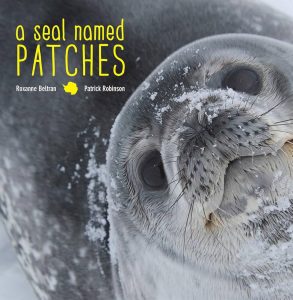
A Seal Named Patches
by Roxanne Beltran & Patrick Robinson
Story for all ages about scientists searching for a Weddell seal named Patches, with lots of info about Antarctic seals and research.
The main story is very easy to follow, but there’s a ton of interesting info in the captions of the beautiful big-format photos of the seals and the Antarctic landscape (and sometimes the tech used there).
Look at it for the cuteness of Weddell seals, and you might find out something you didn’t know yet!
Book stats
| Fun | 🎉🎉🎉 |
| Heartbreak | - |
| Learning | 📘📘 |
| Visuals | 🎨🎨🎨🎨 |
Year published: 2017
Pinnipeds: Weddell seal
Organizations: author Roxanne Beltran of Beltran Lab
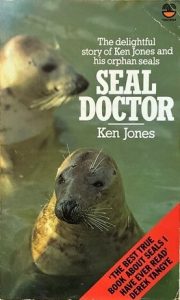
Seal Doctor
by Ken Jones
Offers a glimpse into the early days of seal rescue and the origins of the Cornish Seal Sanctuary in the form of a personal account.
The style of the book might be as outdated as the methods of seal care used there, but it delivers a heart-felt account of a time when nobody knew what they were doing when taking in the so-called “orphans of the sea”, and how much work went into building up a whole seal rescue and rehab operation while just learning on the fly.
The book spans the first decades of the Cornish Seal Sanctuary, with some photos made during this time, showing some of their first residents.
Book stats
| Fun | 🎉 |
| Heartbreak | 💔💔💔 |
| Learning | 📘📘 |
| Visuals | 🎨 |
Year published: 1978 (partial reprint)
Pinnipeds: grey seal, California sea lion
Organizations: author Ken Jones founded the Cornish Seal Sanctuary
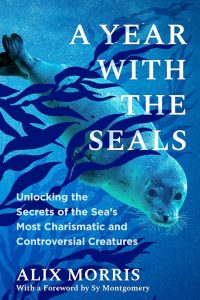
A Year With the Seals
by Alix Morris
A curious newcomer spends a year with seals, uncovering their secrets and our tangled bond with them in this well-balanced wildlife memoir.
If you want to read just one book about seals, this could well be it. It’s very US-focused, but turns out to be a comprehensive compendium of seal conservation and the public perception of seals, experienced from a newcomer’s point of view.
Information about seals in the wild, classic sealebrities, and controversy regarding fisheries (and sharks!) results a balanced, nuanced read, which is ultimately pro-seal. You’ll “regret nothing” if you pull this one from the shelf, and that is also a favorite quote from the book. IYKYK.
Book stats
| Fun | 🎉🎉🎉 |
| Heartbreak | 💔💔 |
| Learning | 📘📘📘 |
| Visuals | 🎨 |
Year published: 2025
Pinnipeds: harbor seal, grey seal
Organizations: features Marine Mammals of Maine
Marine Mammals: the Evolving Human Factor
by Guiseppe Notarbartolo di Sciara & Bernd Würsig (ed.)
Collection of essays about the influence of humans on marine mammals, as protectors as well as hugely detrimental factors.
The essays in this book vary in style as much as in depth and content, from very technical and data-crunching up to ethical and philosophical considerations about the value of non-human lives. Cetaceans are clearly dominating the topics, with pinnipeds underrepresented, but not absent.
Nonetheless, this is an enlightening exploration of human policies and human impact on the ocean and marine mammals, outlining ways for effective conservation. Notable essays are on the effectiveness of Marine Protected Areas (MPAs) and similar zones, considering marine mammals often migrate, on marine mammals in captivity and as factors for tourism, and on conservations wins and near-misses.
Book stats
| Fun | 🎉 |
| Heartbreak | 💔💔 |
| Learning | 📘📘📘📘📘 |
| Visuals | 🎨 |
Year published: 2022
Pinnipeds: multiple species
Organizations: –

Swimming with Seals
by Victoria Whitworth
When you swim in the sea on Orkney, you swim with seals, surrounded by centuries of history and rich wildlife in this story of renewal within life's endless cycles.
In this book, seals are not the main character – the main character is the sea and an otherworldly longing for it, explored along with the history, nature, language, and modern day life on the Orkneys. The story meanders like a stream to the sea, visits places and people of the past and draws lines to our modern life. Its language is beautiful, whether it explores an artifact burried in the sand or a seashell and its natural history, and only at the end it reveals the true destination of the journey.
But the seals are always present throughout the book, and there’s a lot to learn about their behavior and biology. They are like the friendly guardians of a liminal space, between us and oblivion, and maybe the best psychopomps you could ever imagine.
Book stats
| Fun | 🎉🎉 |
| Heartbreak | 💔 |
| Learning | 📘📘📘📘 |
| Visuals | - |
Year published: 2017
Pinnipeds: harbor seal, grey seal
Organizations: –

The Hunter's Breath
by Terrie M. Williams
Accompany an Antarctic scientific research team for one season to find out about the diving skills and icy, dangerous, and beautiful world of the Weddell seals.
If you like to know more about Weddell seals and are also into Antarctic expeditions, this is your book: it describes a research journey to McMurdo Station and beyond to find out more about the world the seals are diving into when they go beneath the ice into depths humans have never seen before. With expensive early 2000s tech, the seals act as cartographers and scientists and carry their own sensor labs along on their dives.
Adventures on the ice and tons of seal stories are included in this book, and you get a feeling for the life cycle of these animals of the extreme who take a journey to birth their pups on the ice, weathering Antarctic storms and a steep learning curve along the way. Makes you appreciate Weddell seals and the people who monitor them big time.
Book stats
| Fun | 🎉🎉 |
| Heartbreak | 💔💔💔 |
| Learning | 📘📘📘📘 |
| Visuals | 🎨 |
Year published: 2004
Pinnipeds: Weddell seal
Organizations: –

Seal Secrets: Cornwall and the Isles of Scilly
by Sue Sayer
A compact little book chock-full of information and stories about the grey seals of the UK, specifically Cornwall, to learn about their lives.
This book is a fantastic overview with some deep dives into the lives of grey seals. You’ll learn about behaviors, capabilities, threats, und their yearly cycles, everything demonstrated with adorable photos.
What elevates this book beyond a mere info dump about seals are the unique insights gained over countless hours of observing grey seals in their natural habitat by Sue Sayer, one of the major grey seal advocates out there. You’ll quickly learn that every seal is a person, and that there’s always a surprise waiting when seals are involved.
This makes Seal Secrets one of the best books to gain knowledge about wild seals and their lives in a compact, well-structured and entertaining way.
Book stats
| Fun | 🎉🎉 |
| Heartbreak | 💔💔 |
| Learning | 📘📘📘📘 |
| Visuals | 🎨🎨🎨🎨 |
Year published: 2023
Pinnipeds: grey seal
Organizations: author Sue Sayer founded the Seal Research Trust

Ethology and Behavioral Ecology of Phocids
by Daniel P. Costa and Elizabeth A. McHuron (ed.)
Essay collection on phocid behavior, covering reproduction, foraging, cognition, communication and more.
Probably the ultimate book on phocids with essays going through general topics like diving and mating behaviors, sensory capabilities, and habitat use for all species. The second half of the book covers seven of the most observed species in detail while also going deep into methods and history.
As always with such collections, style and information density vary from essay to essay. Many of them cover energy demands and use and get into quite some data-crunching, but they also provide a comprehensive look into seal lives, their life cycles, and the restraints their unique amphibious lifestyle puts on them, while showing the limits of our current knowledge. Fascinating bits of information guaranteed in each chapter!
Book stats
| Fun | 🎉 |
| Heartbreak | 💔 |
| Learning | 📘📘📘📘📘 |
| Visuals | 🎨 |
Year published: 2022
Pinnipeds: multiple species
Organizations: –
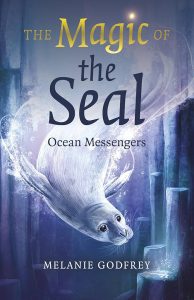
The Magic of the Seal: Ocean Messengers
by Melanie Godfrey
A dive into (Celtic) seal lore, folktales, and the spiritual meaning of seal stories and seal lives with a deep understanding of their nature.
You can find the origins of selkie and other seal stories and a varietey of their traditions in this book, following the author’s journey right to their sources. Based on this, there is some spiritual guidance what they could mean for us, today, and an astute analysis of their haunting power.
But what makes this book stand out is the love and understanding of seals and their life in two worlds that shines through every word, with respect for their wild nature and their need to be themselves. This book could’ve been full of projections, but it’s the actual opposite, looking for the truth of seal and why it can be a gift for humans.
Book stats
| Fun | 🎉🎉 |
| Heartbreak | 💔 |
| Learning | 📘📘 |
| Visuals | 🎨 |
Year published: 2024
Pinnipeds: grey seal
Organizations: –
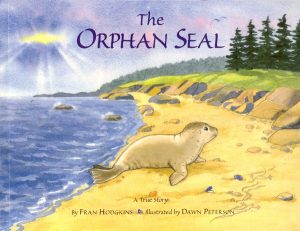
The Orphan Seal
by Fran Hodgkins and illustrated by Dawn Peterson
A beautifully illustrated children's book following and explaining the rescue and rehab journey of a harbor seal pup in New England.
This cute little book for young readers follows the adventures of harbor seal pup Howler from being separated from his mom and rescued by humans until release. We go through all steps of seal rescue with a non-overwhelming amount of explanation and adorable illustrations.
Since the book is over 25 years old, some things mentioned there might be done differently today, starting with not calling seals “orphans” anymore. But these are just small details, and it pictures the overall journey in an easy-to-understand way while teaching how to respect seals.
Book stats
| Fun | 🎉🎉 |
| Heartbreak | - |
| Learning | 📘📘 |
| Visuals | 🎨🎨🎨 |
Year published: 2000
Pinnipeds: harbor seal
Organizations: features New England Aquarium
Intraguild predation in sympatric seals and the effect on a declining population
Izzy Langley, Andrew Brownlow, Debbie J. F. Russell
October 2025
read in: Journal of Animal Ecology
🐟 Seal Snacks
⚠️ Seal Struggles
It’s a seal-eat-seal world out there. This paper looks into impacts on harbor seal populations if grey seals prey on them.
This study investigates intraguild predation (IGP) between grey seals and harbour seals in overlapping habitats with the help of stranding data compared to population trends. Researchers found that adult male grey seals were preying on harbour seals especially during the breeding season – a behavior that amplifies population decline by removing reproductive individuals. The paper highlights how a few specialist predators within the same guild can destabilize vulnerable populations, raising concerns for conservation efforts.
Paper stats
| Species | harbor seal • grey seal |
| Setting | Sympatric coastal habitats |
| Method | Field observations, ecological modeling |
| Why it matters | Conservation impact, predator-prey dynamics |
Sensitivity of the Mystacial Vibrissal System of Harbour Seals to Size Differences of Single Vortex Rings
Yvonne Krüger, Wolf Hanke, Lars Miersch, Guido Dehnhardt
September 2025
read in: Journal of Experimental Biology
🧠 Seal Superpowers
An experiment to find out if a harbor seal can detect small size differences in underwater rings created by fish evasion maneuvers.
This study dives deep into the way harbor seals use their vibrissae to catch prey, even if it’s implementing evasive strategies by obscuring its flight path. This is reproduced in an experimental setting by creating artificial vortex rings of different sizes. The detailed description of the experiment, equipment, and process offers a small glimpse into the effort it takes the seals and the researchers to get results without being able to directly communicate. While the neuro-sensory details of seal whiskers never cease to amaze, the tenacity of those who reveal those superpowers is its own kind of elevated skill.
Paper stats
| Species | harbor seal |
| Setting | Controlled experiments |
| Method | behavioral testing |
| Why it matters | Predator-prey dynamics, sensory biology |
Pinniped Training for Research in Zoos
Alyx Elder, Katherine Todd, Emma McLoughlin, Gary Jones, Robyn Grant
January 2025
read in: Journal of Zoo and Aquarium Research
🧠 Seal Superpowers
📖 Seal Stories
Aquariums provide a great environment for research, as this case-study shows, and their animals are usually pre-trained.
In this study, kind of a meta-experiment, pinnipeds were trained for sensory discrimination tasks in an aquarium/zoo, based on their existing training, to show how zoos and aquariums could be research partners for universities. The researchers used positive reinforcement to teach pinnipeds to respond to visual and tactile cues, helping them study sensory perception in a stress-free, cooperative way, while noting huge differences between individuals and their performances. The study highlights how animal training can support ethical, high-quality research.
Paper stats
| Species | harbor seal • Cape fur seal |
| Setting | Zoo-based research |
| Method | Positive reinforcement, visual/tactile tasks |
| Why it matters | Ethical research, enrichment, sensory science |
Underwater sound production of free-ranging Hawaiian monk seals
Kirby Parnell; Caroline Smith; Adriana Diaz; Kyleigh Fertitta; Pearl Thompson; Philip T. Patton; Isabelle Charrier; Stacie J. Robinson; Aude Pacini; Lars Bejder
November 2025
read in: Royal Society Open Science
🤝Seal Society
Listening in on Hawaiian monk seals revealed that they use a wider range of vocalizations than thought and produce combinational calls.
Researchers recorded a surprising variety of sounds: grunts, trills, and other calls that the animals produced while swimming, foraging, and interacting with one another.
The key finding is that monk seals regularly communicate underwater, and their vocal repertoire is richer and more complex than earlier studies suggested. Many of the sounds appear to be social signals, possibly helping seals coordinate activities, maintain contact, or establish dominance.
The research opens a new window into the secret acoustic lives of one of the world’s most endangered marine mammals. Understanding how monk seals use sound could help conservationists protect them from noise pollution and other human impacts in their fragile ocean environment.
Paper stats
| Species | Hawaiian monk seal |
| Setting | Wild habitat |
| Method | Passive acoustic monitoring |
| Why it matters | Communication, social behavior, conservationt |
Gray Seal Cannibalism at the Largest Colony in the World, Sable Island
Izzy Langley, Damian Lidgard, Priyanka Varkey, Milagros Sanchez, Michelle Rivard, Cornelia E. den Heyer
February 2026
read in: Marine Mammal Science
🐟 Seal Snacks
⚠️ Seal Struggles
This study documents multiple confirmed cases of grey seals killing and eating pups within the world’s largest gray seal colony.
Researchers combined direct observations, necropsies, and photo evidence to identify adult males as the primary perpetrators. The behavior appears to be opportunistic rather than driven by starvation: males attacked pups during the breeding season, often after failed attempts to mate or during aggressive interactions with other males.
The findings matter because they challenge the long‑held assumption that grey seal cannibalism is extremely rare. Instead, at very high population densities (like those on Sable Island) cannibalism may be a recurring ecological pressure pattern that affects pup survival and colony dynamics.
Be prepared for grisly pictures if you read this!
Paper stats
| Species | Grey seal |
| Setting | Wild seal colony |
| Method | Field observations, necropsy, photographic documentation |
| Why it matters | Population dynamics, social behavior, colony ecology |
Postmortem attentive behavior in leopard seals: insights into mother–pup interactions
Emily S. Sperou, Renato Borras-Chavez, Daniel Torres, Gabriela Gómez, Carolina A. Bonin, Victor Neira, Carlos A. Flores Olivares & Sarah S. Kienle
November 2025
read in: Polar Biology
🤝Seal Society
Care for deceased offspring in leopard seals is documented in this paper, while the necropsy of a deceased pup provides new insights.
Not a lot is known about leopard seal reproduction. Researchers took the chance to observe leopard seals in Chile and found different females who showed care for their deceased pup over days, one of them in multiple years. This is generally not observed often in seals, and the observations and conclusions are described in detail.
The chance was taken to do a necropsy of a deceased pup, too, something never done before on a seal of this age. The results of the necrospy and detailed information about the seal’s condition are given, with some conclusions about the cause of death and the general situation of this isolated group of seals in Chile, where there was no successful weaning of a pup so far.
Paper stats
| Species | leopard seal |
| Setting | Wild habitat |
| Method | Field observations, necropsy |
| Why it matters | social behavior, reproductive behavior |