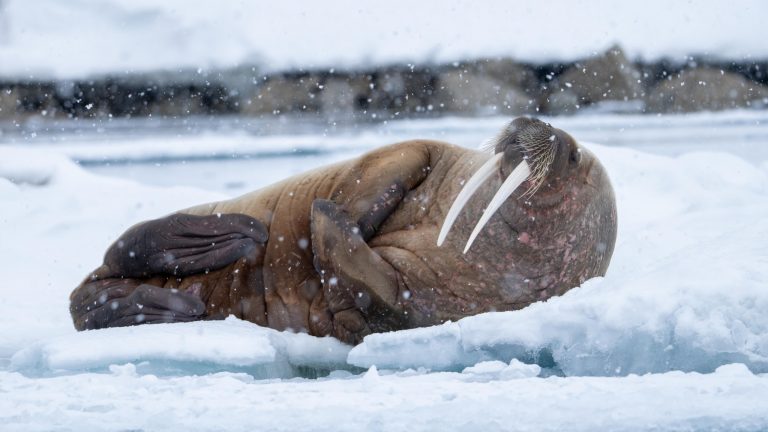
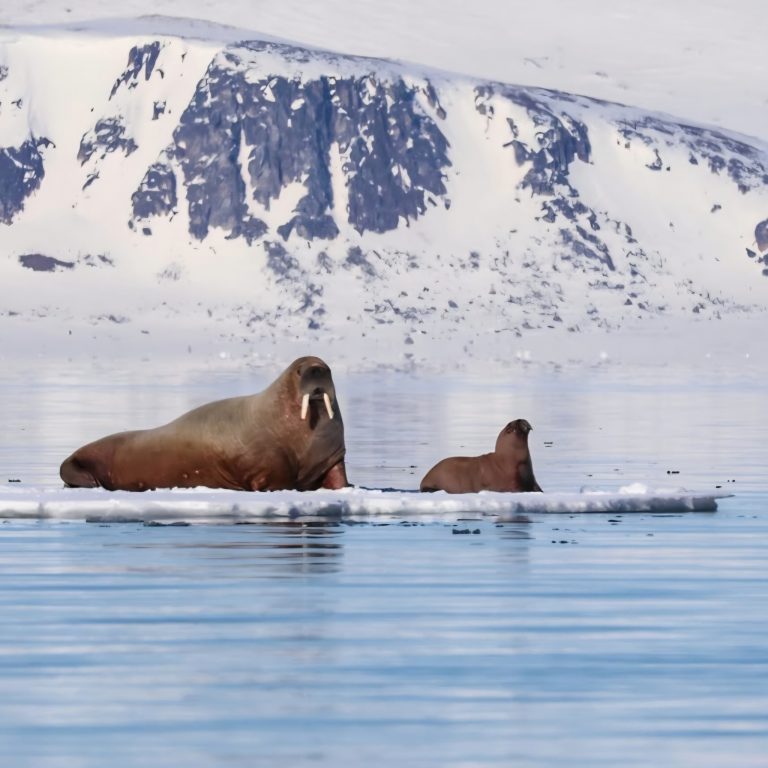
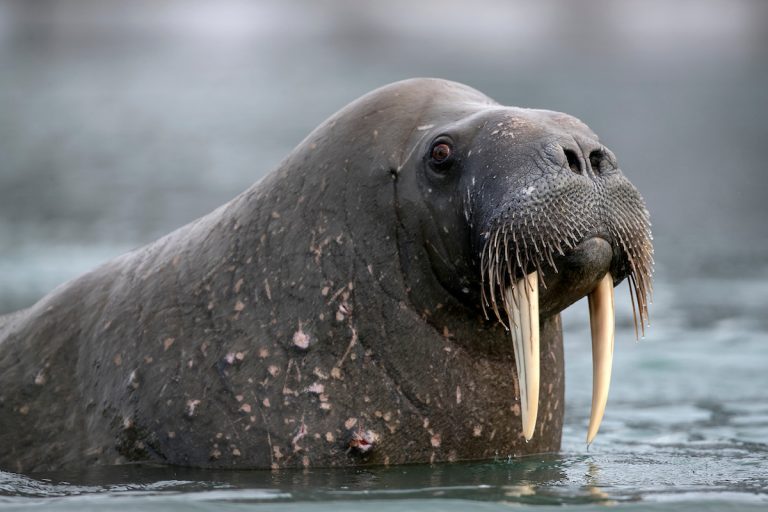
The walrus (Odobenus rosmarus) sits somwhere between eared seals and true seals with its characteristics, but is very much its own pinniped.
Seal Scoop
Habitat
Artic waters of Alaska, Greenland, Svalbard and Northern Russia
Size & Weight
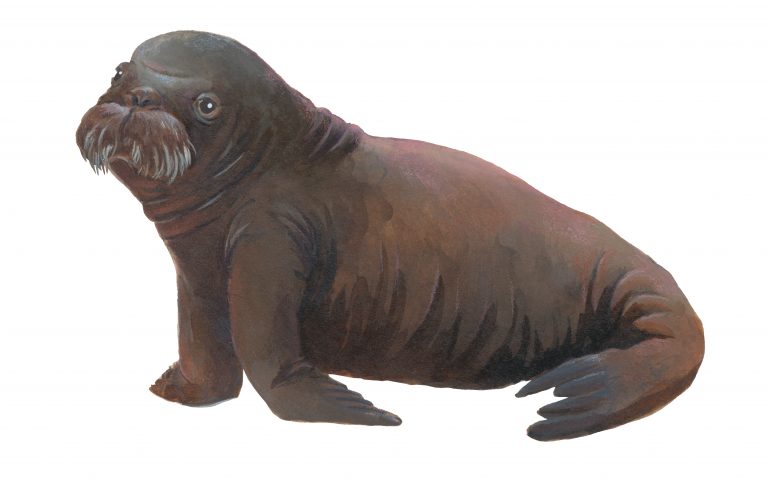
Males: max. 3.6 m and coming in at a whoping 1.900 kg! Females: around 3 m and weighing 1.200 kg. Walrus newborns are 1-1.4 meters and weigh 45-85 kg.
Status
Vulnerable; threats coming from global warming which causes loss of habitat.
Why do walrus need our help?
Because of climate change the habitat of these beautiful pinnipeds is changing rapidly. Global warming causes the ice to melt; stable ice is essential in the life of a walrus, as they give birth, rest and care for their young on ice!
Mining in the Arctic, both on land and deep beneath the seafloor, poses a critical threat to walrus populations by destroying their feeding grounds, creating noise pollution, and causing stress for these pinnipeds.
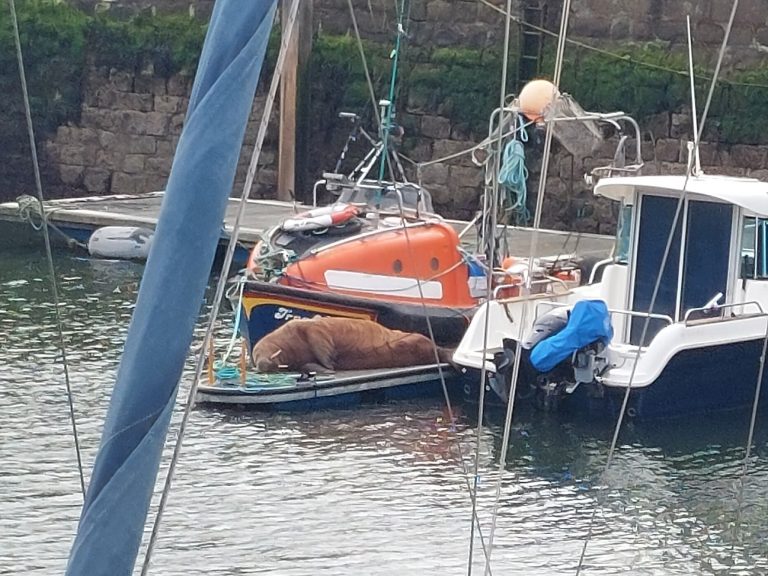
In the rescue context, roving walruses are seen on their own beyond the Southern reaches of their habitat sometimes and cause upheaval in the harbors they turn up in by lying on boats or docks. Because of their size, people’s interest in them and their need for rest until they manage to swim back to their Arctic home, they often need management.
Orphaned walrus calves also turn up in seal rescue, but it’s rare because of the small overlap of walrus habitats with the influence sphere of rescue centers.
Who helps walrus?
There are sort of 3 subspecies of walrus, but only the first two are certain!
1- The Pacific walrus – Odobenus rosmarus divergens. This one lives around Alaska and the Pacific Ocean, hence the name! Somewhat larger then the others but not a big difference. 2 – The Atlantic walrus – Odobenus rosmarus rosmarus. Lives in East Canada and Greenland in the Atlantic Ocean. A bit of a smaller snout, but again, almost no difference. 3 – Laptev Walrus – Odobenus rosmarus laptevi. A mysterious maybe third subspecies of walrus! Living in the Laptev Sea which lies in the North of Russia/Siberia. If this walrus is a distinct subspecies is an ongoing long debate; some say it’s just a family of the Pacific walrus because of its DNA, but research has shown that they are also a bit different, so this is sort of the third subspecies!
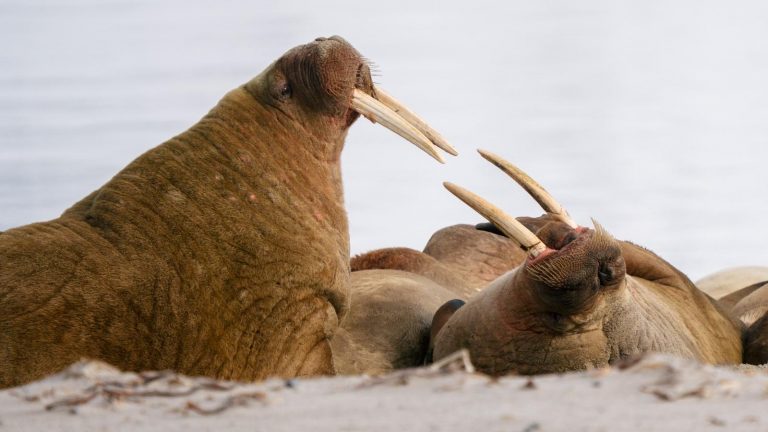
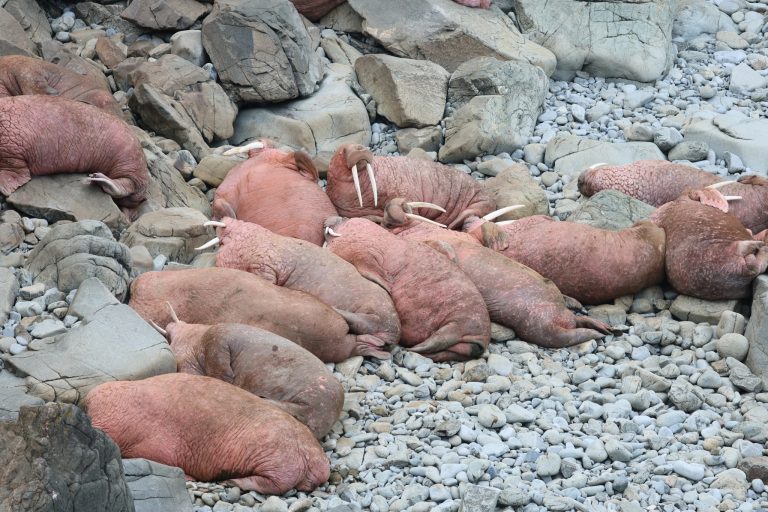
Walruses are thigmotactic. This means they like to be in close physical contact with other walruses. They live in herds of sometimes thousands of animals. This love for being closely confined by other walruses is the reason roving solitary walruses like to cuddle up in too small boats and sometimes annoy the owners by sinking them.
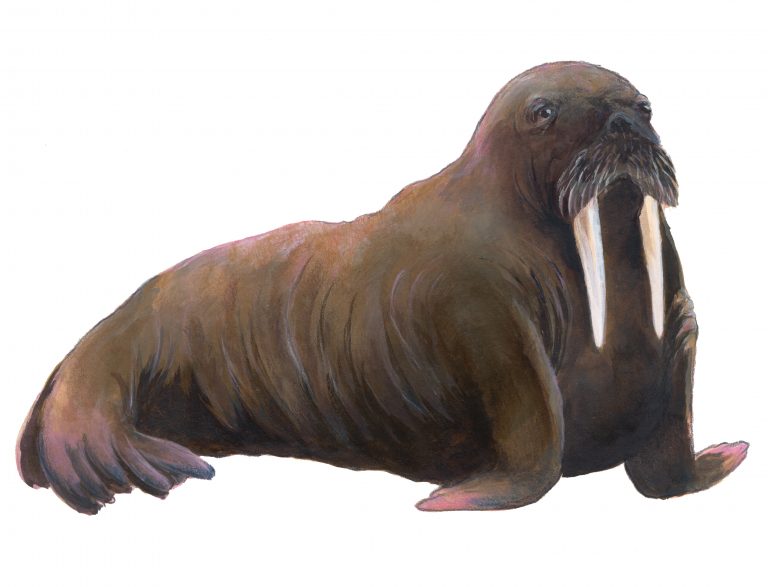
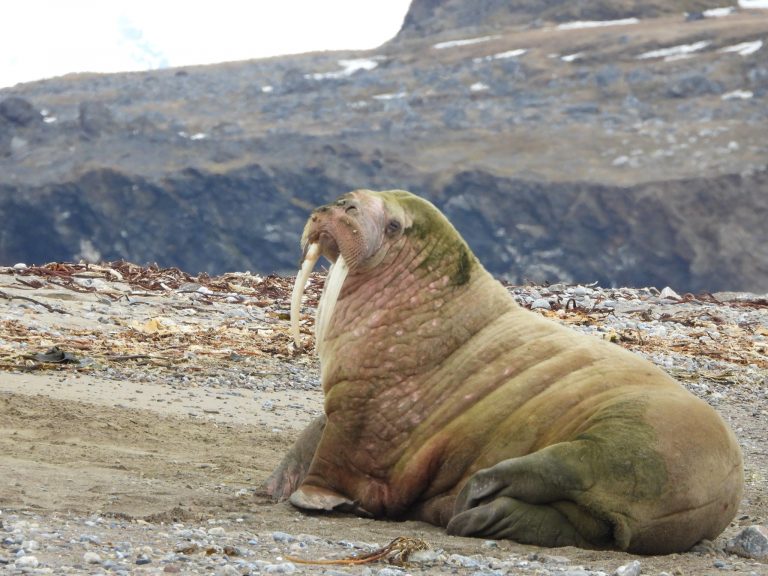
Walrus tusks are elongated upper canine teeth that grow continuously throughout their lives. Found on both males and females, they can reach up to 1 meter in length! They are the only pinnipeds to have tusks.
Walruses have the longest nursing period among pinnipeds: calves stay with their mother for an avarage of 2 years! They can swim within hours after birth and migrate over open water with their herd, often on the back of their mother.
Just like a lot of other pinnipeds, walruses are polygynous, which means they are not bonded to one mating partner, but males will mate with multiple walrus females.
Walrus have short, coarse and patchy fur that thins with age, as they rely fully on blubber for insulation as adults. Their color looks pink when they are on land and need to get rid of heat (their blood vessels are dilated), pale white when they are in icy water (their blood vessels are constricted), and cinnamon-colored in their normal state.
In the family pinnipedia there are three classes: Phocidae – true seals, Otariidae – eared seals & lastly Odobenidae – walruses! The walrus fits in the last one and is the only one is the class, while the others have many of different species. Walruses have characteristics of both other classes: they have no outer ear flaps, but can rotate their hip and “walk” on land like eared seals, while in water, they propel themselves with their hind flippers like true seals.