
晴 (Haru) is a illustrator from Japan, best known for creating art of seals from rescue centers, especially WEC. Haru created the sticker art for our first Donation Dive and an animation as a digital reward for future Donation Dives.
See more of their art: Instragram, Patreon
On the boundaries between seals and humans and the smiles seals bring
Haru kindly answered some questions about drawing seals, inspiration, and how to responsibly depict the rehabilitation process. This interview was conducted as part of Donation Dive #1.
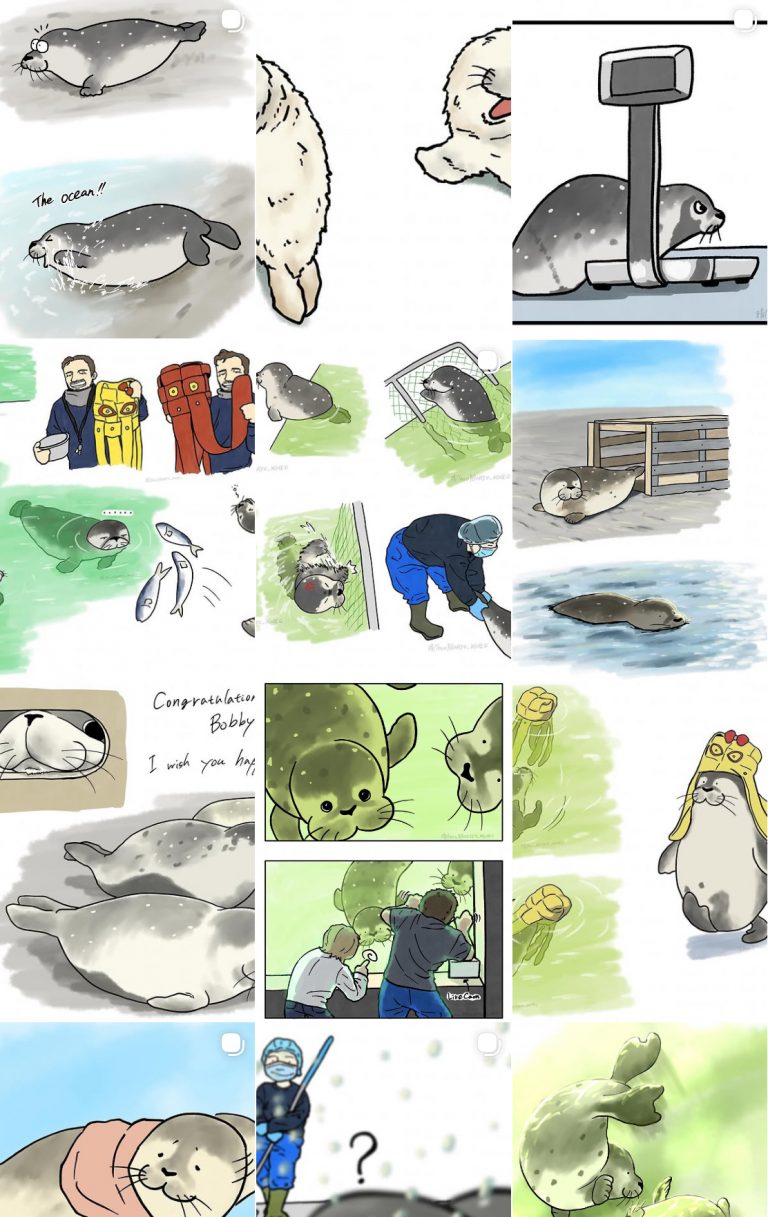
The Seal Signal: I believe you were growing an affection for seals around the time when Zeehondencentrum became well-known in Japan. What was it about seals that initially drew you in?
Haru: Seals were not a particularly special presence to me at first. I simply thought of them as animals that are cute, in a very vague way.
However, as Zeehondencentrum became more well-known in Japan and I started watching the seals more closely, I found myself drawn to their behavior and characteristics – for example, how they resemble dogs in some ways, or how they can swim so swiftly underwater, yet once on land they can only wobble forward little by little (which always makes me smile).
Your seal illustrations are full of character and incredibly expressive. Is there something you specifically like to draw, some characteristic or quirk of seals?
I try to draw seals in a way that makes their movements and the differences between species easy to understand. In particular, I really enjoy drawing their muzzles, and the large front flippers of grey seals.
Your work not only covers seals, but also the process of rescuing and rehabilitating them. Is there something in seal rescue, an event or part of the process, that left a lasting impression on you?
One part of seal rescue that left a strong impression on me is the process of observing a seal before deciding whether rescue is truly necessary, instead of intervening immediately.
It made me feel how deeply Zeehondencentrum respects seals as wild animals and how much love there is behind that careful judgment.
Also, when I drew scenes of force-feeding weakened seals, I researched the topic in detail so that people seeing it for the first time could properly understand why it is so important.
You often draw this fine line where humans and seals meet, even if it needs to be short and not leave a lasting impression on the seal. How do you express the fleeting nature of these human-seal encounters?
Humans and seals naturally live in different environments.
People who rescue seals injured by marine debris and later release them back into the wild respect that boundary between wildlife and humans. To reflect this, I try not to add too much dialogue to my illustrations, so that neither side interferes too deeply with the other.
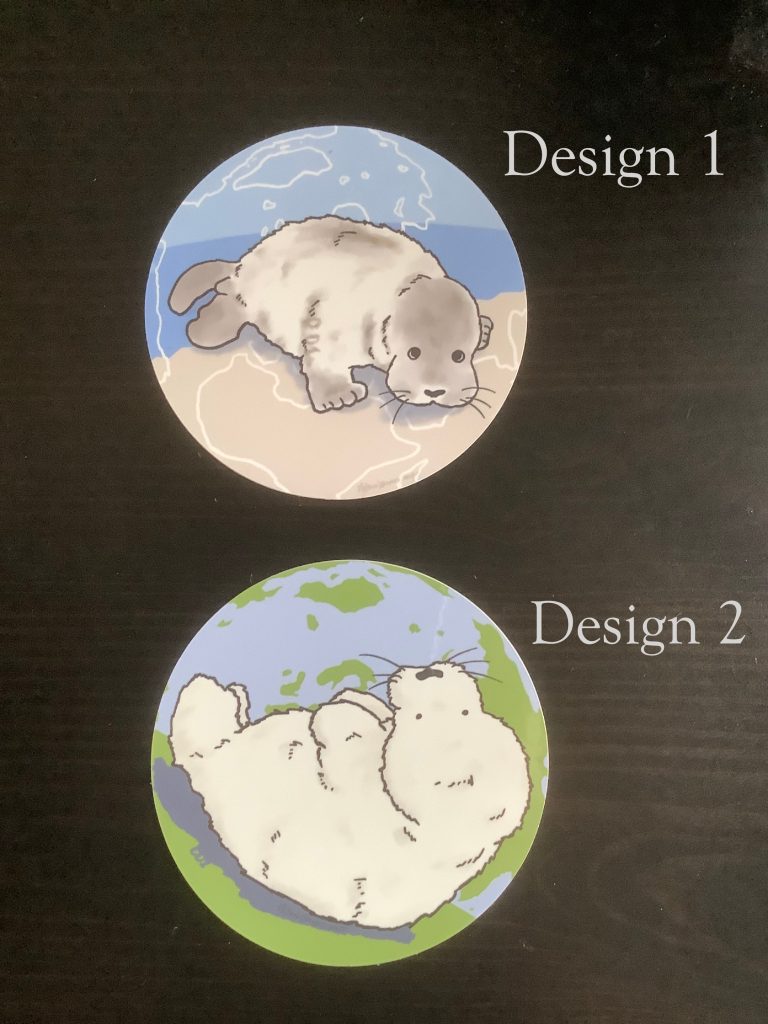
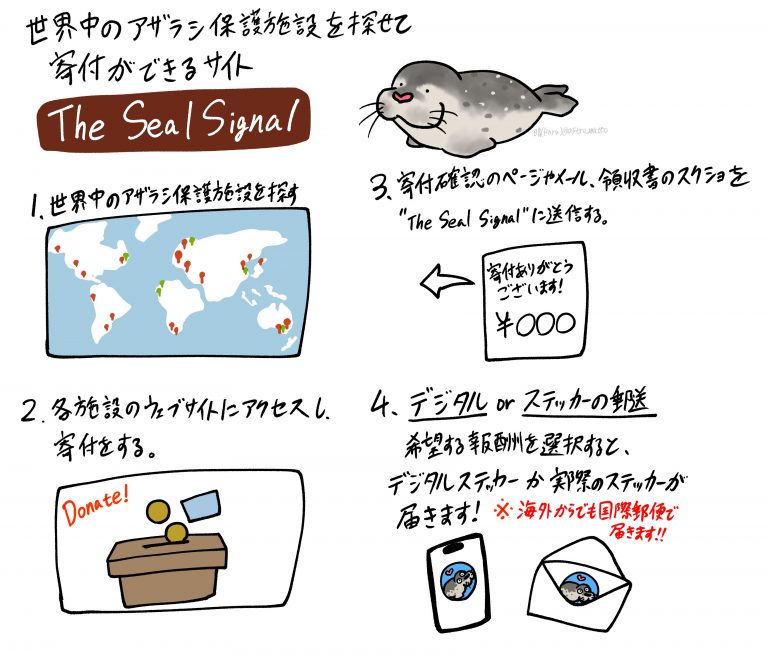
Your illustrations sometimes have surreal qualities – gigantic seals, seals in space, icecream seals. Are these adorable explorations inspired by things you see real seals do?
These illustrations are inspired by real seals. The space seals were inspired by how seals move underwater – their motion feels almost weightless, as if they were floating in outer space. The ice cream seals, too, come from the patterns, colors, and soft, round body shapes.
What’s your favorite seal?
My favorite seal is Sil.
His charming expressions and the distinctive tag on his forehead completely stole my heart (in the best way).
Thank you for kindly taking the time out of your busy schedule to answer these questions, and for helping seals once again by supporting our Donation Dive from the start!